Portuguese Doors: The Painted Doors of Portugal, in Wood
By Rama Gallery · 22 October 2026
Walk through the old centre of almost any Portuguese town and the doors stand out. Painted in strong blues, greens, reds and yellows, set into stone surrounds, often weathered and patched, with the house number fixed or tiled above, they are one of the things visitors photograph most.
They are ordinary front doors, which is part of their appeal. Most are old wooden doors that have been repainted many times, repaired rather than replaced, and set against walls that tell their own story of repairs.
What makes a Portuguese door
The doors themselves are usually solid timber, often in two leaves, with raised panels, and sometimes a small window or grille at the top. Colour is the first thing people notice. Paint is how a householder has always protected wood and made a door their own, and in an old street each door tends to be different from its neighbours.
The setting matters as much as the door. Around many of them, the stone frame is left bare while the wall is whitewashed or tiled. Portugal took to covering house fronts in glazed tiles, azulejos, from around the 1840s, when factories in Porto began producing them in quantity, and a tiled wall makes a painted door look brighter still.
Time does the rest. Sun and rain fade paint unevenly, wood splits and is filled, hinges and knockers are replaced. The doors people love most are rarely the newest.
Where to see them
The historic quarters of Lisbon and Porto are the best known, particularly the steep, older streets where buildings have not been replaced wholesale. But the same thing is true of towns and villages across the country, including the inland towns of central Portugal.
Doors in three dimensions
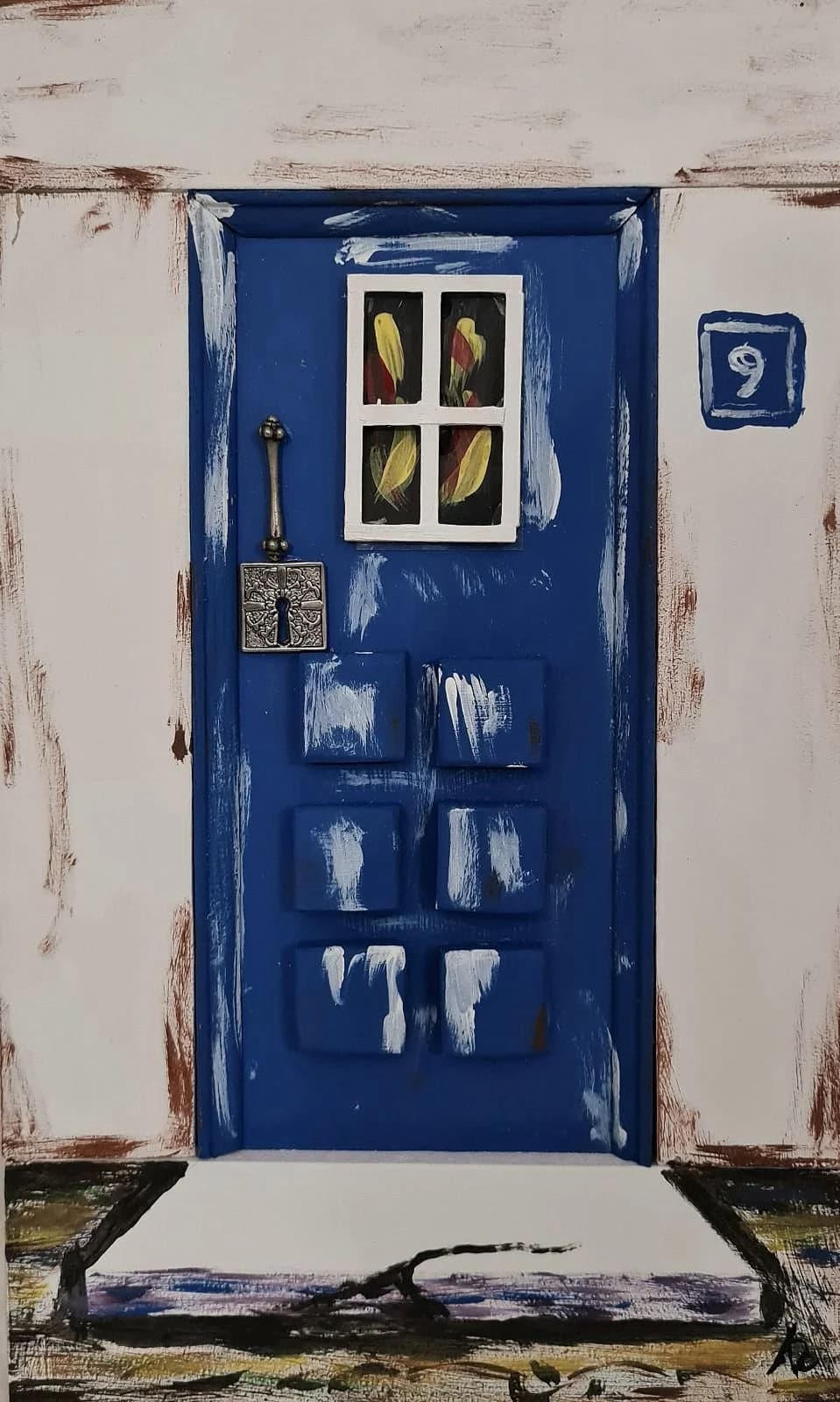
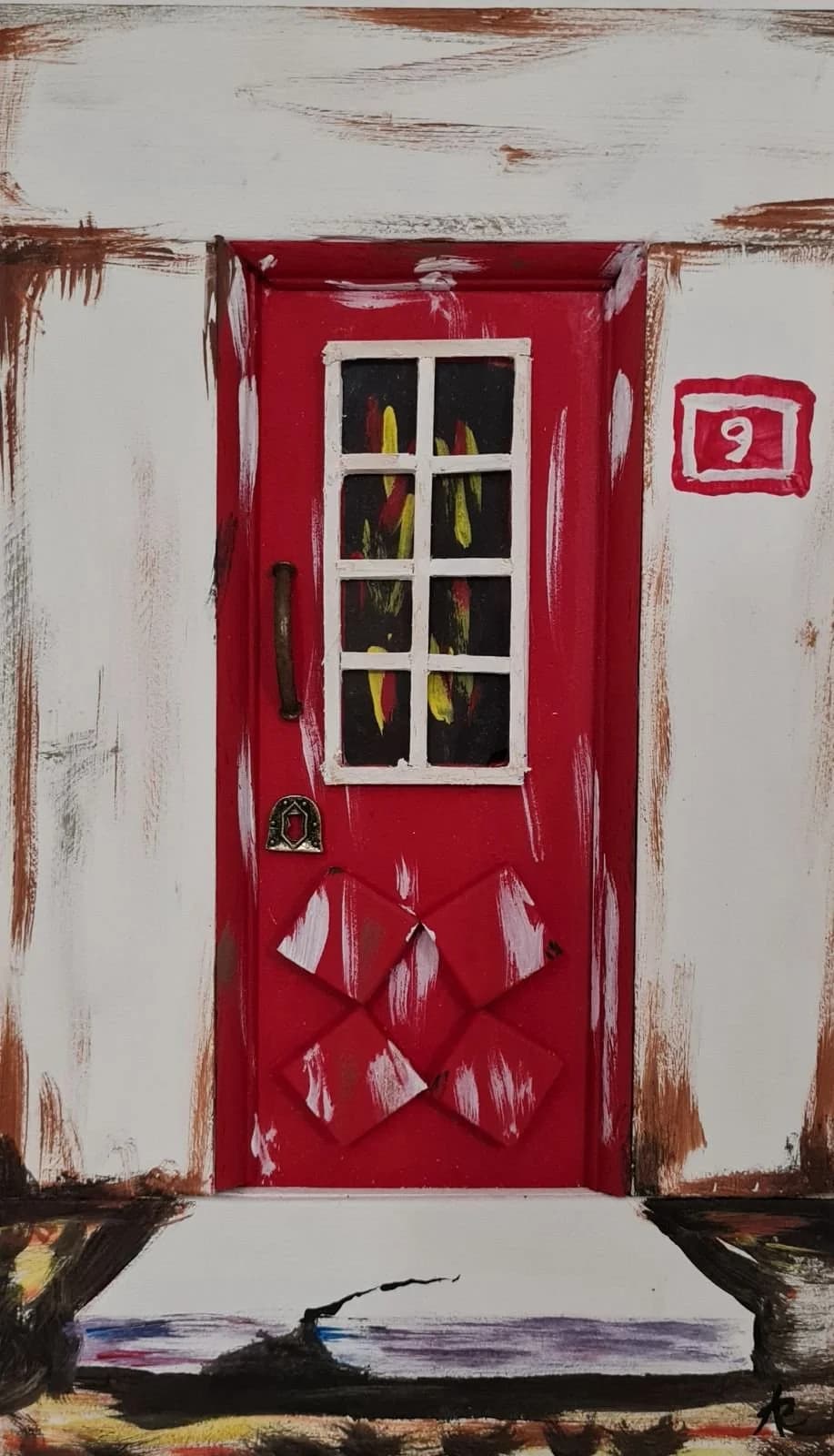
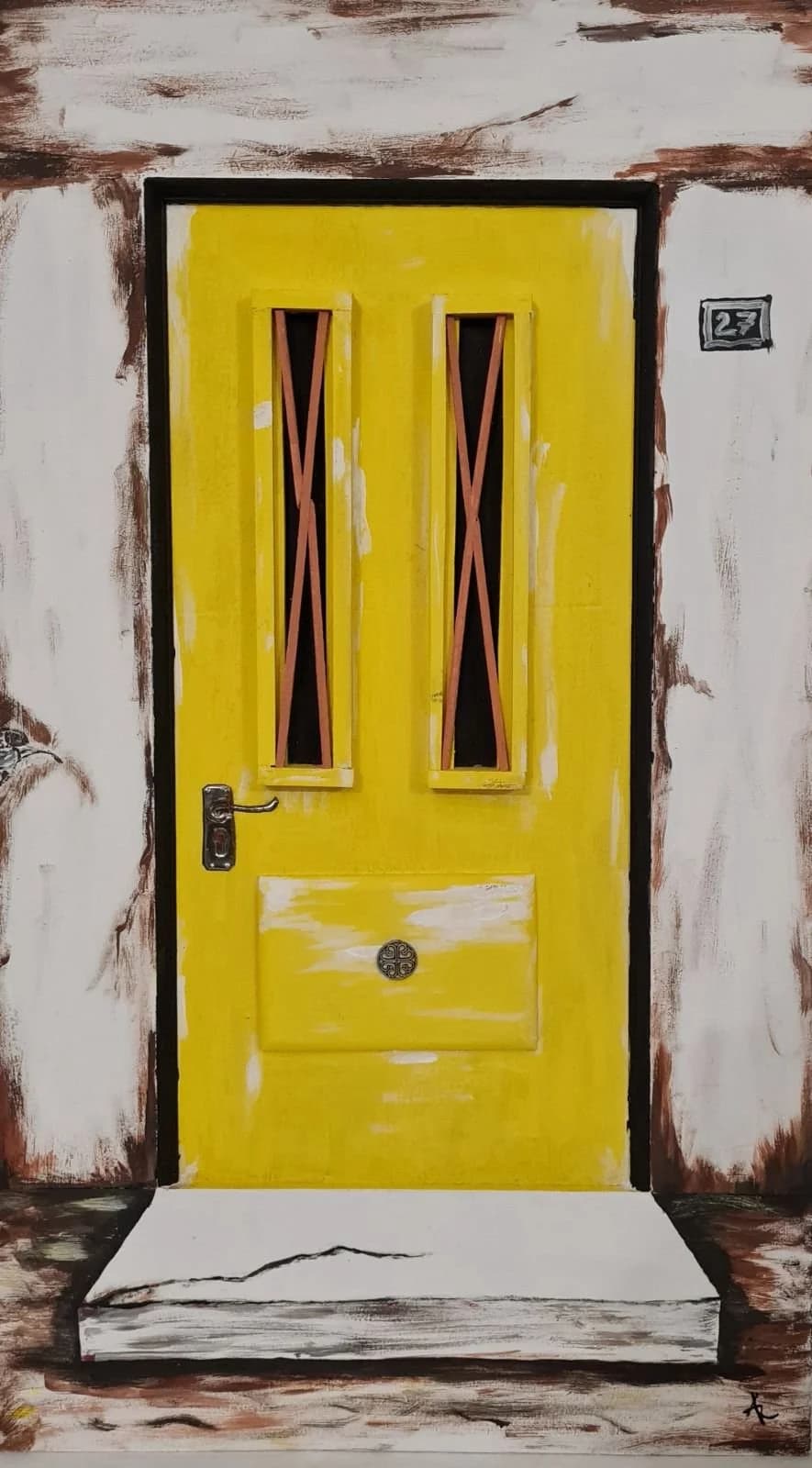
Artur Rama was born in Canas de Senhorim, a village in the municipality of Nelas, in the Viseu district of central Portugal, and returned to live in Portugal in 2021. Alongside his paintings, he makes small Portuguese doors in three dimensions.
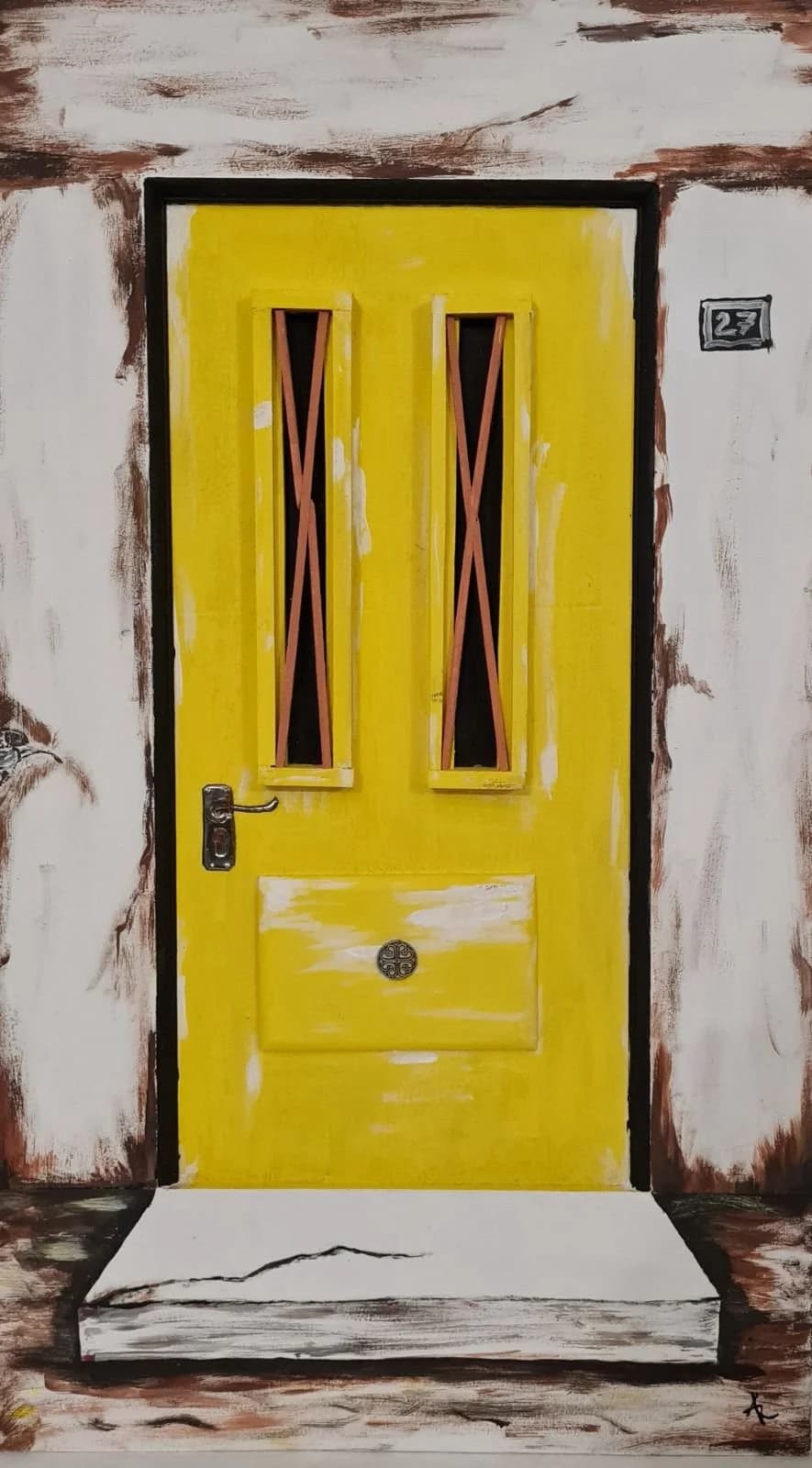
Each one is built from recycled wood and painted in oil, so the door and its step stand proud of the surface like the real thing, with the house number painted on a small tile beside the frame. Number 9 Blue and Number 9 Red are a pair at around 16cm by 27cm, and Number 27 is larger, at 30cm by 52cm. Because the wood is reclaimed, the grain and wear are real rather than painted on.
At that size they suit a narrow wall, a hallway or a shelf. The whole group is on the doors page, and the rest of Artur's work, from portraits to landscapes, is on his artist page.